Woes continue for the still mythical small modular reactors. Deep Fission (Nasdaq: FISN), the Berkeley, California-based startup whose micro-reactors would be buried in mile-deep boreholes at a site in Parsons, Kansas, is now facing potential lawsuits from alarmed investors. Six law firms are investigating Deep Fission for securities fraud to mislead shareholders when it issued its IPO last June, selling 2.5 million shares of stock at $16.00 per share. A subsequent report by Iceberg Research, claimed that Deep Fission’s technology is overhyped and unlikely to become commercially viable, which sent stocks plummeting. Failure to disclose these known risks could be a violation of securities laws. The Parsons community of 9,000 is also pushing back against the project.
HOLTEC BOTCHES REFUELING What else can go wrong now?
Holtec has screwed up refueling the Palisades nuclear plant in a rush to reverse decommissioning it, to instead restart it for power production. Now they’ve got a radioactive damaged nuclear fuel assembly leaning against the inside of the reactor pressure vessel that has stopped the refueling process indefinitely. They can’t move the damaged fuel assembly using the fuel handling machinery shielded under water back to the spent fuel pool without bending safety rules. Holtec is fashioning a short cut to transfer the damaged nuclear fuel in a cask without the required constant cooling and shielding underwater. Instead, the loaded cask will travel through a massive containment hatch outside, in a race to submerge it in the spent fuel pool before it overheats.
The U.S. grid’s greatest point of failure comes down to a handful of aging, hand-built machines most people never think twice about: transformers.
After more than three decades building infrastructure at the intersection of energy and technology, starting with EV charging in its earliest days, I've watched firsthand how physical infrastructure constraints become the limiting factor for entire industries. Transformers are the next one.
Most of the country's grid runs through a small number of massive, custom-built transformers. Replacing even one takes years. That vulnerability is baked into the design of the system itself, and the loss of a single transformer has the potential to be devastating across an entire region.
Since 2020, a shortage of these transformers has pushed wait times as long as five years, creating a constraint that touches every industry that depends on reliable power. Pandemic-era supply chain breakdowns collided with rising electricity demand, and now data centers are pushing demand to new records.
Transformer demand in 2027 is expected to more than double what it was in 2020. Meanwhile, the transformers already on the grid are aging out, and an estimated 75 percent of distribution transformers have already passed the end of their expected service life.
The design of these transformers hasn't changed much since the first commercial transformer went into use in 1886. They still rely on Grain-Oriented Electrical Steel (GOES), a specialty material that's difficult and slow to produce. Skilled labor is scarce, supply is tight, and only about 20 percent of transformers purchased in the U.S. are manufactured domestically, with the rest imported from a handful of countries, including China, South Korea, and Mexico.
Wait times continue to increase, with no sign of relief in the near future.
Even a facility that manages to secure new transformers still has to get in line. Connecting new generation or large loads to the grid means waiting in an interconnection queue, and for projects completed in 2025, the median wait from request to going live topped five years.
I built Blink Charging through a similar moment. In 2009, we deployed charging stations when the EV market was still in its infancy, well ahead of the demand that would eventually catch up to that infrastructure.
Diversification offers a way forward now, shifting load off the transformers causing the delay. On-site, distributed microgrids bypass both constraints at once, since they don't wait on grid capacity and don't rely on conventional transformers. Instead, they draw from energy sources generated and stored on-site.
Smart microgrids use solid-state transformers, built from ferrite and silicon carbide rather than GOES steel. Those materials are already in high supply because of their use in the EV industry, so equipment built around them isn't competing for the same scarce steel or the same backlogged production lines.
Solid-state transformers are also built from small, modular components, which means a damaged unit can be repaired by replacing a module rather than waiting years for a full custom-built replacement.
Battery storage adds another layer of resilience. Batteries make better use of the power already available on the grid, storing it when it's cheap and abundant and releasing it when demand spikes. A more resilient grid may not come from a handful of massive fixes. It may come from many smaller, distributed interventions working together, generating power on-site, forecasting demand, balancing loads intelligently, and storing low-cost energy for peak hours, exactly the kind of system our team at NextNRG has built our platform to manage.
The industrial sector has spent years adapting to material shortages and long lead times elsewhere in the supply chain. Power infrastructure deserves the same scrutiny, and the operators who start diversifying now won't be the ones caught waiting five years for a part.
COVERT TOWNSHIP, MICHIGAN - Any day now Michigan’s Palisades nuclear plant owner Holtec International will be ready to make history. Expected Nuclear Regulatory Commission (NRC) approval of an “emergency” license amendment request may allow the company to resume a refueling plan that collapsed August 30. Right now no one knows if Palisades will create enough energy to power the equivalent of 800,000 homes or wind up in the ash can of nuclear industry history.
Holtec’s solution to the nightmare that rudely interrupted the plant restart is the energy story of the year. Another failure could turn little Covert Township, Michigan, into an international media and nuclear energy hot spot. This October surprise could also damage Republican attempts to hold on to Congress during the midterms.
CEO Krishna Singh, who lives 1,400 miles away from the scene in a $10 million Jupiter, Florida, home, has good reason to be a little jumpy about this speed bump on his path to becoming a billionaire. Unfairly dubbed the Donald Trump of nuclear energy, this low profile nuclear power speculator rules an empire stretching from Kiev to Camden, New Jersey. As soon as the war ends in Ukraine his company plans to begin work on 20 new nuclear reactors.
Today Holtec is more than two years behind its target to reopen Palisades. Some potential investors are pursuing other opportunities. Top managers have recently being pink slipped or quitting. The company website is looking more and more like what you would expect from an NFL team that just dropped out of the race to the Super Bowl.
Even worse, the primary rationale for reopening the plant with $3.1 billion in federal and state financial support is losing steam. Proposed new nuclear power plants costing about $16 a watt can’t compete with far safer, cheaper and quicker to build renewable solar and wind power coming in around $1 a watt. Across our planet much safer renewables are beginning to trounce slow to build nuclear.
Much has changed since Holtec did a 180 four years ago on its plan to buy and decommission half-century old Palisades on Lake Michigan’s southeastern shore. The NRC's “emergency” license amendment coupled with generous government subsidies, could make the plant profitable. Alternatively this reprieve would give Holtec an opportunity to make another error that would return Palisades to decommissioning.
“This emergency rush to restart Palisades,” suggests Don’t Waste Michigan’s Michael Keegan, “is about the need for greed not the need to protect public safety.”
To understand the gravity of this proposed repair job it’s important to know a little more about the way other modern nuclear power plants are designed in depth.
A reactor core is fueled by a mix of two-thirds new and one third spent fuel assemblies safeguarded in a pool of borated water. This protects workers and, in the event of a containment breach, the public, from radiation exposure.
The new assemblies are only slightly radioactive before they are placed in the reactor core. However a 500 degree radioactive spent fuel assembly raised out of the reactor cavity pool would expose workers to a fatal radiation dose Equally troubling is the possibility that radioactive gases emitted from the fuel rods inside an assembly could escape into the neighborhood around the plant.
This explains why thousand pound fuel assemblies are held under at least 10 feet of water. Dilution and partial retention of life threatening fission products protects employees and, in a worst case scenario, the public. No wonder Holtec left the damaged fuel assembly safely stowed underwater in the fuel pool cavity.
In their September 30 license exemption request the company asked the NRC to break one of the cardinal rules of nuclear power plant safety. Damage to fuel rods inside the assembly blocks access to the spent fuel pool via an underwater channel that resembles a tube. To get around this problem the company has proposed lifting the assembly above the water line. That is just as scary as it sounds.
Holtec wants to place the wounded fuel assembly in a shielded fuel transfer canister to be lifted out of the pool via a crane and special rigging. Under a self- imposed 133 hour limit, the company would attempt to return the fuel assembly to the spent fuel pool area via an equipment hatch. No company has ever done this before.
Industry veteran Arnie Gundersen who has worked in 70 nuclear plants during his career says he “doesn’t know of a single situation where a damaged spent fuel element has been transferred in the air.
"I’d venture that anywhere else no one would consider doing this in an operating nuclear power plant. The risk is just too high, especially in view of what just happened on August 30 at Palisades. If there is a mistake the cleanup could take a very long time.”
According to Gundersen, the fact that the spent fuel assembly is already beyond repair, means it could be safely moved to an out of the way underwater location. Failure of the specially designed fuel transfer canister shielding the spent fuel could expose workers to dangerous radiation.
Even worse, if the special container is lifted above the water and something goes wrong in the vulnerable transfer process radioactive gases could escape containment. This could quickly turn into an emergency triggering an evacuation order for the surrounding community near South Haven.
Holtec’s Hail Mary application to the NRC raises another key question: How can there possibly be an “emergency” at a nuclear plant that is not in operation producing electricity?
The answer to this question speaks directly to the fact that one of key rationale’s behind President Trump’s heralded nuclear renaissance is power hungry AI data centers. The fact that Michigan’s gubernatorial and U.S Senate candidates agree the public has the right to a moratorium on data centers, undercuts billions in taxpayer subsidies wasted on the Palisades restart.
No one understands this better than the Trump centric leadership at the downsized and “doged" NRC which recently cut safety inspection hours by 38 percent and security inspections by 50 percent.
After giving Holtec a long list of safety related waivers on everything from fire protection to questionable steam generator tubes, the shorthanded NRC is moving the company’s license amendment request ahead at warp speed. This is happening without the customary comment, hearing and review process that can take four months or longer.
To better understand what’s at stake for the future of the nuclear energy industry and the public it’s helpful to turn back the clock to August 30. That was the day Holtec began loading nuclear fuel into the Palisades reactor core.
A crack camera team was on hand to document this first ever restart of a reactor closed for decommissioning. This happy day was interrupted by a surprise loss of control accident unprecedented in the history of American commercial nuclear power.
It started when a dangerously radioactive thousand pound fuel assembly tipped 30 degrees toward the safety critical reactor core shroud. This huge stainless steel cylindrical component is central to the reactor pressure vessel. The disaster also broke the beyond repair assembly containing 216 bundled fuel rods filled with uranium pellets.
Holtec personnel believed that this disaster did not trigger the NRC’s safety reporting requirements. On September 8, the company boldly launched a $900 million initial public offering road show aimed at pushing Holtec valuation to $10.2 billion. There was no mention of the wayward and dead on arrival fuel assembly.
Naturally a potential billionaire like CEO Singh would never roll the dice on an IPO in the middle of a true plant emergency. Courted investors were reminded that the long delayed plant would be opening soon.
What these customers didn’t know was that ten days earlier fuel loading was “paused" after that assembly went rogue and “tipped" and tipped 30 degrees. Inevitably the bad news leaked on Reddit and the media. Soon the Union of Concerned Scientists criticized Holtec. The company was forced to "pause" its IPO on September 17. The New York Times quickly noted that a nationwide call for a moratorium on power hungry AI data centers threatened investor support for nuclear.
Unless it can start selling electricity quickly Holtec’s Palisades division might have to borrow money to begin paying off a $1.52 billion Department of Energy loan that comes due in March.
This is one of the obvious downsides of corporate socialism. Hiding disturbing facts from generous taxpayers and the politicians they elect is always a struggle. Voters don’t like throwing away public money on pipe dreams.
As the media began piling on about this breaking news, Nuclear Regulatory Commission’s spokeswoman Victoria Mitlyng, made it clear there was “no radiological release” during the August 30 fuel loading crisis. She added that neither the workers nor the public were harmed. In her mind there was not an emergency in Covert Township.
In a surprise September 30 NRC emergency licensing amendment application the undaunted company asked to begin correcting its error and reloading fuel inside the plant October 2. The NRC withheld this letter from the public until October 5.
After reviewing this request the agency gave the public a day to comment on Holtec’s proposal. Comments submitted by veteran nuclear industry experts who, unlike Holtec, have actually spent decades operating nuclear plants, focused on the applicant’s dubious attempt to redefine a plant emergency.
The company justifies its application on the theory that "the NRC refers to emergency situations as those in which a failure to act in a timely way would result in … shutdown of a nuclear power plant.”
That’s a stretch in more ways then one. First, Holtec has never run a nuclear reactor. Second, this operator readily concedes that its request is not related to an actual safety related emergency:
“Palisades is requesting emergency processing of this license amendment request as a delay in approval of the proposed changes would result in a delay in the resumption of activities necessary to reach the plant conditions required to restore the plant to power operation.”
This sentence appears to immediately disqualify Holtec’s request for a emergency license amendment. It allows the company to skip posting a notice in the Federal Register, a NRC notice inviting public comment and a public hearing. There is a critical detail here that sheds light on Holtec’s confusion. For several years it has repeatedly failed to meet a self-imposed deadline to start the rebuilt plant. It has never sold a single kilowatt of nuclear energy. It is wrong to claim there is a need to "restore the plant to power operation.”
Despite these facts it appears that the NRC will go ahead and approve a Holtec license amendment. If this happens there will not be a further opportunity for the public to challenge the company’s rushed plan to remove the damaged fuel assembly and resume fuel loading in a way no one has ever heard of.
By evading the hearing process Holtec and the public will not have an opportunity to learn from outside experts how to prevent another fuel loading disaster. It is also possible that public comment could help the company come up with a much safer solution to its damaged fuel assembly problem. Of course this inexperienced operator could be tutored by experts who know what they are doing. This will also give the NRC staff needed time to follow up with a thoughtful analysis of how Krishna Singh’s management allowed this improbable fuel loading accident to happen.
Holtec’s current attempt to begin work outside the normal inspection review and public hearing process could be self-defeating. If anything goes wrong there could be a real emergency potentially endangering the health and welfare of workers as well as plant neighbors. Failure could crush Holtec’s ambitions here and at four other reactors it intends to build in Michigan with taxpayer money.
The agency has failed to respond to a petition submitted by Alan Blind, the plant’s former design engineering manager. He wants to suspend any fuel loading and block Holtec’s proposed license amendment request pending a thorough public review of what went wrong August 30.
Blind says Holtec’s improvised solution "requires a lot of training, safety features and administrative oversight. Right now we don’t know what happened. Many things had to go wrong for this to occur. In addition to full disclosure on the fuel assembly drop and disengagement of the fuel handling grapple, he wants a review of the restart modification program.
“Safety doesn’t just happen in industry. There are many layers of protection,” says Blind. “This is why it’s incumbent for the NRC to prioritize the public benefit of doing a thorough and thoughtful job to eliminate the possibility of another mistake involving reactor fuel. Holtec does not understand the seriousness of this situation.”
Taxpayers supporting the multi-billion dollar reactor restart need to be aware of potential risks. The operator's proposed plan to rescue the wayward fuel assembly could have important radiological consequences.
“Holtec is taking legal shortcuts to restart fast without careful planning and review,” adds Blind. "The worst thing that might happen could potentially be within regulatory limits. They told the NRC that the doses within the control room and on the perimeter of the plant were acceptable.
"The legality of this action does not mitigate the fact that workers and people living near the plant could still receive a much higher dose than what they would normally get.
"For example workers in the control room could quickly receive up to 60 percent of their annual exposure limit in a worst case scenario. It’s also possible that radioactive gases escaping from the plant would force evacuation of nearby residents, despite the fact that this exposure level remains within NRC legal limits.
"As a nuclear power plant executive I too have requested emergency processing. This is the kind of thing that happens when you are waiting for a replacement pump that is arriving later in the day.
"It makes sense to keep the plant running rather than doing a shutdown for a short period of time. However, I have never heard of anyone using plant economics as the rationale for an NRC emergency licensing amendment during startup. Historically I don’t think the NRC has ever done this.
“Holtec has said camera monitors prove the damaged fuel assembly and reactor are also in a safe condition. There is no urgency to begin refueling. It is reasonable to assume that the work can be done safely following the normal review process that takes months.
"What is not reasonable is to do this work as if it is an emergency. Holtec needs to provide more information to the NRC to make sure everything is done legally."
One of Blind’s major concerns is why the design factors that prevent this kind of fuel assembly loading failure didn’t work.
“Emergency processing was never intended to shut down all avenues for public participation in the process that includes well informed experts."
A key question surrounds the NRC’s decision to give Holtec a waiver that allowed fuel handling staff to work well beyond normal limits during a startup.
Employees working in this safety critical realm were permitted to be on the job for up to 54 hours a week and get just three days off every fifteen days.
“Was fatigue a factor?” asks Blind who points out that this could kind of overtime could not happen in other safety critical industries such as the airlines.
He is especially concerned about the possibility that core loading could resume while the NRC is processing his petition. Additional fuel assemblies could be subjected to the same presently unidentified condition before the NRC has completed consideration of the requested enforcement action.
Another big question mark is turnover in senior management during the months leading up to the fuel loading failure. Holtec’s president, chief nuclear officer and plant manager Jeff Borah have all departed.
Borah was an exceptionally well-qualified Palisades employee who worked tirelessly in ten key positions at Palisades for both Entergy and Holtec since 2012. This well respected nuclear energy pro got it right when he told the New York Times in July that restarting this plant "is like building a fire truck on your way to a fire."
This underscores a question for the plant’s new chief safety officer. I’ve been told that his first day on the job was Monday August 31, the day after the fuel assembly disaster.
Who was in charge at Palisades on Sunday August 30th? How does this person explain what went wrong?
“We know that something highly unusual happened on August 30,” says Blind. “There had to be multiple failures for this to occur. A reasonable person would say that Holtec is going too fast. We need to understand everything that went wrong to make sure the same thing doesn’t happen again. We want the NRC to make corrective actions."
Understandably, Holtec’s proposed recovery operation worries Kalamazoo based Kevin Kamps, executive director of Don’t Waste Michigan. This dedicated watchdog has kept a careful eye on this plant for decades.
From his vantage point, 35 miles downwind from Palisades, it’s clear that risks associated with Holtec’s recovery plan are not hypothetical. There are a number of precedents going back to the old days when Consumers Power (now Consumers Energy) and one of the nation’s most experienced nuclear fleet operators, Entergy, ran the plant. Here Kamps summarizes a few of the reactor’s greatest hits:
"In 1993, a broken fuel rod led to two emergency evacuations of all Consumers Power plant personnel from the containment. This was a precaution against significant potential radioactive hazards, including during the recovery operation."
"In 2005, a two-day dangle of a 107-ton, fully loaded highly radioactive waste container above the indoor wet storage pool was a close call with catastrophe."
"This Consumers Energy incident was kept quiet for several months. The recent August 30, 2026 incident was concealed until September 21. NRC's top public affairs spokesperson for the Midwest region, Viktoria Mitlyng, said in both cases, the public was not informed because the incidents were not deemed ‘reportable.'
"In both cases, it took vigilant watchdogs and reporters to bring the incidents to light, not the owner/operator of Palisades, nor NRC.
"From December 2024 to April 2025, Holtec undertook a large-scale transfer of highly radioactive waste from the indoor wet storage pool into outdoor dry cask storage.
"Holtec did so with no radiological emergency plan in place. There was no evacuation planning for the local, area, and perhaps even regional population, if a disaster unfolded, due to the drop of a heavy cask into the pool.
"Holtec took advantage of Palisades' then decommissioning status, a regulation-free zone, despite the inherent risks of such an operation.
"Rookie error-prone Holtec's unprecedented restart of the Palisades zombie reactor will risk a Chornobyl or Fukushima-scale catastrophe, a hundred yards from the shoreline of the Great Lakes, drinking water supply for more than 40 million people in eight U.S. states, two Canadian provinces, and a large number of Indigenous Nations."
While Holtec and the NRC don’t share Kamps’s view this Palisades debate is caught in a kind of legal never never land.
In the near term it is unlikely that Congress, the Michigan Legislature, the state’s Attorney General, or public intervenors can quickly score a data center style moratorium on Holtec. Given Congressionally backed Department of Energy support for four other nuclear plants Holtec plans to build next to Palisades and in northern Michigan, the company remains optimistic.
Kevin Kamp's careful analysis reveals the total tab for this portion of Trump’s Nuclear Renaissance could bring in $16 billion for Holtec to pursue its dreams to operate five Michigan nuclear reactors.
At the moment it’s highly likely that Holtec will soon be pulling the trigger on a Palisades startup.
Only one person, the politician who effectively controls the NRC, could stop resumption of fuel reloading in beautiful Covert Township. Unfortunately at the moment he and his Secretary of Defense are a bit preoccupied with another nuclear reactor in far off Iran.
That could change quickly during a West Michigan campaign swing. Perhaps he and his wife would enjoy a tour with Republican Congressman Bill Huzienga who sees Palisades as an economic engine for his district located in the plant evacuation zone.
I can imagine Krishna Singh joining them for a grand reopening reactor tour days before the midterm election. They would look good posing for photographers on a Lake Michigan beach with sand beneath their toes.
There couldn’t be a better backdrop than Palisades going critical at sunset.
The Limerick plant in Pottstown, Pa. (Photo: Constellation)
Google has signed a 20-year power purchase agreement (PPA) with Constellation to support adding 890 MW of new nuclear capacity to 11 reactors across the PJM Interconnection region, including in Illinois, Pennsylvania, and New Jersey.
The announcement Tuesday is the latest in a growing number of deals involving utility companies, tech giants, and nuclear power generation. It is the second announcement in about a week involving Constellation, as the utility recently entered a long-term PPA with Amazon that will see its Calvert Cliffs power plant in Maryland get a 190-MWe uprate. Google, meanwhile, is involved with a number of nuclear projects, including a partnership with Southern Nuclear’s Georgia Power, announced in September, to uprate the Vogtle and Hatch plants.
Uprates incoming: Constellation will invest more than $4.3 billion in the 11 units as part of the PPA. This work will include modernizing and upgrading turbines, steam generators, and digital control systems. It has not been announced yet which Constellation-owned units are part of the PPA, but Constellation spokesman Paul Dempsey told Nuclear News the plants involved include Braidwood, Byron, LaSalle, and Quad Cities in Illinois; Limerick in Pennsylvania; and PSEG Nuclear’s Salem in New Jersey (Constellation owns 43 percent of Salem). A video Constellation posted on its Facebook page also named Braidwood as one of the selected facilities.
According to Constellation, the first uprate is “expected to be delivered by 2028.” The Nuclear Regulatory Commission’s list of expected uprate applications has Constellation submitting multiple applications over the next few years, including one listed for the fourth quarter of 2028. The list, however, doesn’t contain any specific plant names or units for Constellation.
Both companies said the PPA aligns with the Trump administration’s Ratepayer Protection Pledge and the Department of Energy’s UPRISE program, and is intended to support energy growth by increasing the power output from existing nuclear facilities without passing costs on to customers.
“We’re committed to meeting our growth responsibly by actively investing in clean, reliable power that brings new capacity to our nation’s grids,” said Amanda Peterson Corio, Google’s global head of energy and power. “Our agreement with Constellation to fund nuclear reactor uprates will strengthen the PJM grid, which serves 67 million people, all while protecting energy affordability and supporting local union jobs.”
Other details: In addition to the nuclear PPA, the two companies entered into a separate 15-year energy supply agreement for 2,700 MW of power within the PJM region.
Under an expanded five-year technology agreement, the two companies also reached an agreement on Constellation’s use of Google’s cloud and artificial intelligence services, including Gemini Enterprise agentic workflows. The “AI for Energy” approach would shorten engineering and regulatory work on uprates, improve construction and operation performance, and better protect critical infrastructure, according to the announcement.
This agreement is expected to sustain roughly 4,400 existing jobs and create another 7,200 new construction jobs during the building period, Google and Constellation said.
“Preserving and expanding the output of the existing nuclear fleet and developing new clean generation is critical to meeting our nation’s growing energy needs while keeping costs affordable for homes and businesses,” Constellation President and CEO Joe Dominguez said in a statement. “This long-term clean energy collaboration with Google can serve as a model for how technology companies and the energy industry can work together to responsibly develop the digital economy and invest in our nation’s energy infrastructure in a way that delivers grid-wide benefits for all, funded by private entities.”
We hope you all are staying safe and healthy as temperatures are dropping. We are seeing fall colors now in our foliage here in Southeast Michigan, a beautiful farewell before we enter our long winter!
More news coming in from the desk of Grandmother Jessie Collins about new materials and money coming in for nuclear power plants and data centers, as well as information from Beyond Nuclear about the waste leaving our power plants. Check it out!
Suspicious Storage of Fermi 2 Components
DTE owns land and a storage spot at 8001 Haggerty Road, Belleville, MI entitled Western Wayne Service Center (WWSC) and they have applied to the Michigan Department of Energy, Great Lakes, Environment (EGLE) to expand the area and create a high-risk area to store Fermi “components” but no explanation of what those components would be.
The expansion covers wetlands, which DTE states will be made environment friendly by leaving a four-inch gap at the bottom for frogs and snakes to pass through. Twenty-foot blank spaces of wetlands sacrificed around the fence.
Benefits for the Van Buren Data Center Vetoed
This hyperscale data center project called "Project Cannoli" would be a massive 282-acre computer facility planned east of Haggerty Road and north of the I-94 North Service Drive. It is projected to use between 2 million and 3.6 million gallons of water per day and one gigawatt of power. Van Buren Township officials approved $125 million in tax incentives in late May. However, Wayne County Executive Warren Evans has vetoed the proposed tax incentives and a community benefits agreement for this plan.
The Problems with Nuclear Waste Storage
We’re resharing with you an important resource from Beyond Nuclear about nuclear waste storage. As of 2025, about 90,000 metric tons of highly radioactive and toxic nuclear waste (or “spent fuel”) generated at commercial nuclear power reactors sit at U.S. reactor sites, waiting for a permanent disposal solution. Each year, an additional 2,000 more metric tons are generated.
Nuclear waste cannot be stored safely on the Earth’s surface for the millions of years it remains dangerous. Deep geologic disposal is the most effective strategy for providing long-term protection of human health and the environment from contact with this extremely hazardous material.
Citizen's Resistance At Fermi Two (CRAFT) is an Indigenous-led, grassroots, organization, committed to an accessible, fair, and just energy future for all! CRAFT originally formed after the Christmas Day 1993 incident at the Fermi2 nuclear reactor that dumped 1.5 million gallons of untreated toxic, radioactive water into Lake Erie. We will continue to push for the closing of Fermi2, and for a safer world powered by renewables.
West Virginia drops bid for $50B federal Nuclear Innovation Campus
by Charles Young EDITOR
2 hrs ago
3 min to read
West Virginia has joined a U.S. Department of Energy initiative exploring nuclear energy development, building on recent state efforts to remove legal and regulatory barriers to nuclear power.
Morrisey Screenshot
Quick take:
West Virginia will not host a federal nuclear campus: The state Office of Energy said Sept. 30 it cannot execute the U.S. Department of Energy’s hosting agreement or fully commit to its requirements.
The state had previously pursued the opportunity: West Virginia joined the DOE’s Nuclear Lifecycle Innovation Campus initiative and submitted a broad proposal in April that included nuclear generation and manufacturing as well as fuel recycling and spent nuclear fuel storage.
Morrisey opposed nuclear waste disposal: Gov. Patrick Morrisey has said West Virginia should pursue nuclear generation and manufacturing but “will not be a dumping ground for nuclear waste.”
CHARLESTON, W.Va. — West Virginia will not host a federal Nuclear Lifecycle Innovation Campus after state officials said they are unable to execute the required hosting agreement and fully commit to its requirements.
In a Sept. 30 letter to Marla Morales, acting deputy assistant secretary in the U.S. Department of Energy’s Office of Nuclear Energy, West Virginia Office of Energy Director Nicholas S. Preservati said the state cannot sign the agreement but remains committed to supporting President Donald Trump’s and Energy Secretary Chris Wright’s vision for a national nuclear renaissance.
Preservati also said West Virginia remains ready to support the DOE, the Nuclear Lifecycle Innovation Campus initiative and future campus recipients.
The decision marks a change from earlier this year, when West Virginia joined Idaho, Tennessee, Utah, Oklahoma and Louisiana in pursuing participation in the federal initiative.
The DOE program is intended to support development across the nuclear fuel cycle. Proposed campuses could include fuel fabrication, enrichment, used nuclear fuel recycling, advanced reactors, power generation, research and advanced manufacturing.
DOE estimates have indicated an individual campus could attract up to $50 billion in capital investment and create nearly 25,000 jobs. Those figures represented the potential scale of an individual campus and were not projections for West Virginia.
As part of its earlier participation, the West Virginia Office of Energy submitted a 48-page response in April to a DOE request for information about establishing Nuclear Lifecycle Innovation Campuses.
The state’s response described a broad vision for a campus and said West Virginia had “maximum interest” in hosting one.
The proposal called for West Virginia to serve as “the nation’s central hub for nuclear fuel recycling, interim storage, and long-term materials stewardship.”
It included potential development of a consolidated interim storage facility for partially spent and spent nuclear fuel from active and decommissioned nuclear power plants. The proposal also discussed fuel recycling, materials recovery and potential long-term disposal options.
The April response identified four potential sites: the 1,000-acre Hobet site in Boone County; the 380-acre Century site and 508-acre Casto site in Jackson County; and the 407-acre Old Standard site in Jefferson County.
Additional potential locations were identified in Grant County, Mason County, the Kanawha Valley and the Ohio River Corridor.
The sites had not been fully vetted or qualified based on geological characteristics, according to the state’s response.
The broad scope of the proposal also differed from Morrisey’s public position on West Virginia’s nuclear strategy.
Morrisey has emphasized nuclear power generation and manufacturing as ways to attract investment and high-paying jobs while building on the state’s existing energy industries.
“We are pursuing nuclear generation and manufacturing to bring high-paying jobs to West Virginia,” Morrisey said.
At the same time, Morrisey has explicitly rejected using West Virginia as a site for nuclear waste disposal.
“But West Virginia will not be a dumping ground for nuclear waste. Period,” Morrisey said.
Morrisey had directed the Office of Energy to ensure sites identified in final applications were considered only for nuclear generation or manufacturing.
The DOE initiative does not require participating states to host every type of nuclear activity contemplated by the broader federal program. States pursuing campuses were expected to enter hosting agreements with the department as the process progressed.
West Virginia’s decision not to execute the agreement ends its pursuit of hosting a campus through the current process, while state officials said they will continue to support the broader federal initiative and future campus recipients.
West Virginia’s efforts to expand its nuclear industry followed changes in state law.
In 2022, the Legislature repealed restrictions dating to 1996 that had limited construction of nuclear power plants in West Virginia.
In 2024, lawmakers established a state radiation control framework and began the process of seeking an agreement with the U.S. Nuclear Regulatory Commission. Those changes did not authorize construction of a nuclear plant at any specific location.
West Virginia officials have previously pointed to the state’s existing energy infrastructure, industrial base and workforce as potential advantages for nuclear-related development.
The state’s decision to decline the federal hosting agreement does not preclude other nuclear development in West Virginia, including projects focused on nuclear generation or manufacturing.
Editor Charles Young can be reached at 304-626-1447 or cyoung@wvnews.com
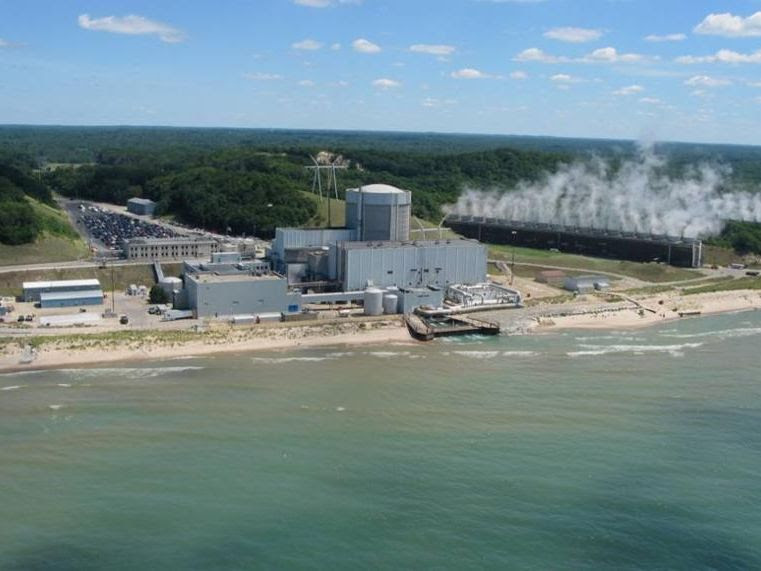
[“Built in the late 1960s, the Palisades nuclear power plant began commercial power generation at the end of 1971 and it operated for roughly 50 years until it permanently shut down in May 2022.” Holtec International is now attempting to make Palisades the first commercial reactor in the US to repower after permanent cessation.
On August 31, 2026, the Nuclear Regulatory Commission (NRC) issued two notices of violation to Holtec for its Palisades restart work based on the findings of NRC inspectors that Holtec "‘failed to implement and maintain its radiation protection program for work activities with high alpha contamination levels,’ and ‘failed to monitor internal dose for individuals impacted by elevated airborne radioactivity in accordance with established procedures.’ Inspectors further found that ‘the issues with high alpha contamination levels and airborne radioactivity were not promptly raised to sufficient levels to initiate timely corrective actions to prevent repeated occurrences.’"
The NRC characterized the violations as Green-level findings because no regulatory dose limit was exceeded with workers despite the elevated levels of airborne radioactivity.
On August 31, 2026, Holtec issued a news release announcing that it had begun fuel-loading at Palisades. The press release said that refueling consisted of 204 fuel assemblies and included both new fuel and previously used fuel assemblies from the Palisades plant's final operating cycles prior to its shutdown in May 2022.
Apparently around the time it began the refueling process, a used fuel assembly tilted from its upright position after it had been placed, and the fuel-handling machine grapple was disengaged.
“A nuclear power plant's fuel assembly is a bundled structural matrix of ceramic uranium dioxide fuel pellets stacked inside long metal tubes, supported by a rigid framework. An assembly typically has 179 to 264 fuel rods, is 12 to 14 feet long and weighs between 700 and 1,750 pounds.”
“Neither the Palisades plant's owner, Camden, New Jersey-based Holtec, nor NRC officials released information to the public about the incident for weeks.”
Holtec finally mentioned the fuel rod assembly incident in one of several notices in a September 21, 2026 overview press release titled "Progress Report on Palisades’ March to Startup." Holtec said it has paused fuel loading activities while it seeks to determine the cause of the incident. The statement said: “‘Consistent with the plant’s nuclear quality assurance program, a root cause evaluation has been initiated to determine the cause of the event and identify any resulting corrective actions. In parallel, Holtec’s corporate engineering division has devised and is developing equipment for the fuel retrieval and on-site storage equipment to return the fuel to the spent fuel pool. Palisades is also preparing a License Amendment Request (LAR) for submission to the NRC related to the proposed methodology to retrieve the assembly.’"
In a Sept. 24 statement to the Free Press, NRC spokeswoman Viktoria Mitlyng said that the incident “‘did not meet reporting requirements to the NRC.’"
On September 26, 2026, in a news story headlined “Nuclear regulators probe fuel assembly installation mishap at Palisades”, the Detroit Free Press covered the incident and noted that Palisades’ refueling had been halted as Holtec seeks a license amendment from the NRC to retrieve the assembly from within the nuclear reactor vessel.
Edwin Lyman, a physicist and director of nuclear power safety with the Union of Concerned Scientists (UCS), a leading nuclear energy watchdog, found the incident and lack of transparency disturbing: "‘I suspect that the rush to do things quickly is leading to mistakes − and you don't like to have too many mistakes when you're talking about a nuclear power plant’" he commented.
Lyman noted that the use of old spent fuel isan issue, “‘because once it's been irradiated there are fission products within the fuel, and if one of those fuel rods were to rupture, some of those gases could escape’". He added, “‘It's not as radioactive as spent fuel that's no longer usable and is waste. But it has more radioactivity than in an unradiated assembly. It will increase the challenge to recovery compared to if it was all unradiated fuel ... it will require very special precautions.’”
Lyman additionally called the August 31, 2026 NRC violation notices to Holtec "’very disturbing”" and that he does not put much stock in the NRC's assessment of the incident's low safety significance.
Referring to the agenda of the Trump administration to push ahead with nuclear development, Lyman reflected, “‘The NRC is now a tool of the White House political program, and that program is expanding nuclear power as fast as possible and getting rid of regulations that they saw as slowing it down.’”
President Trump’s Executive Order 14300 of May 23, 2025 ordering the reform of the NRC and directs "‘a deadline of no more than 18 months for final decision on an application to construct and operate a new reactor of any type, commencing with the first required step in the regulatory process, and (2) a deadline of no more than 1 year for final decision on an application to continue operating an existing reactor of any type, commencing with the first required step in the regulatory process.’"
One new rule proposed by the NRC, Lyman said, would reduce the scope of non-emergency events that have to be reported to either the NRC or the public in a timely fashion.
The recent incidents at Palisades, "‘illustrate that trying to speed things up, trying to reduce oversight to meet arbitrary timelines, is counterproductive in the end, because ultimately it only causes delays down the road or potentially even worse,’” Lyman said. “‘Nuclear power operation isn't something you can speed up and lower your guard on without expecting serious consequences.’"]
Michel Lee, Esq.
Chairman
Council on Intelligent Energy & Conservation Policy (CIECP)